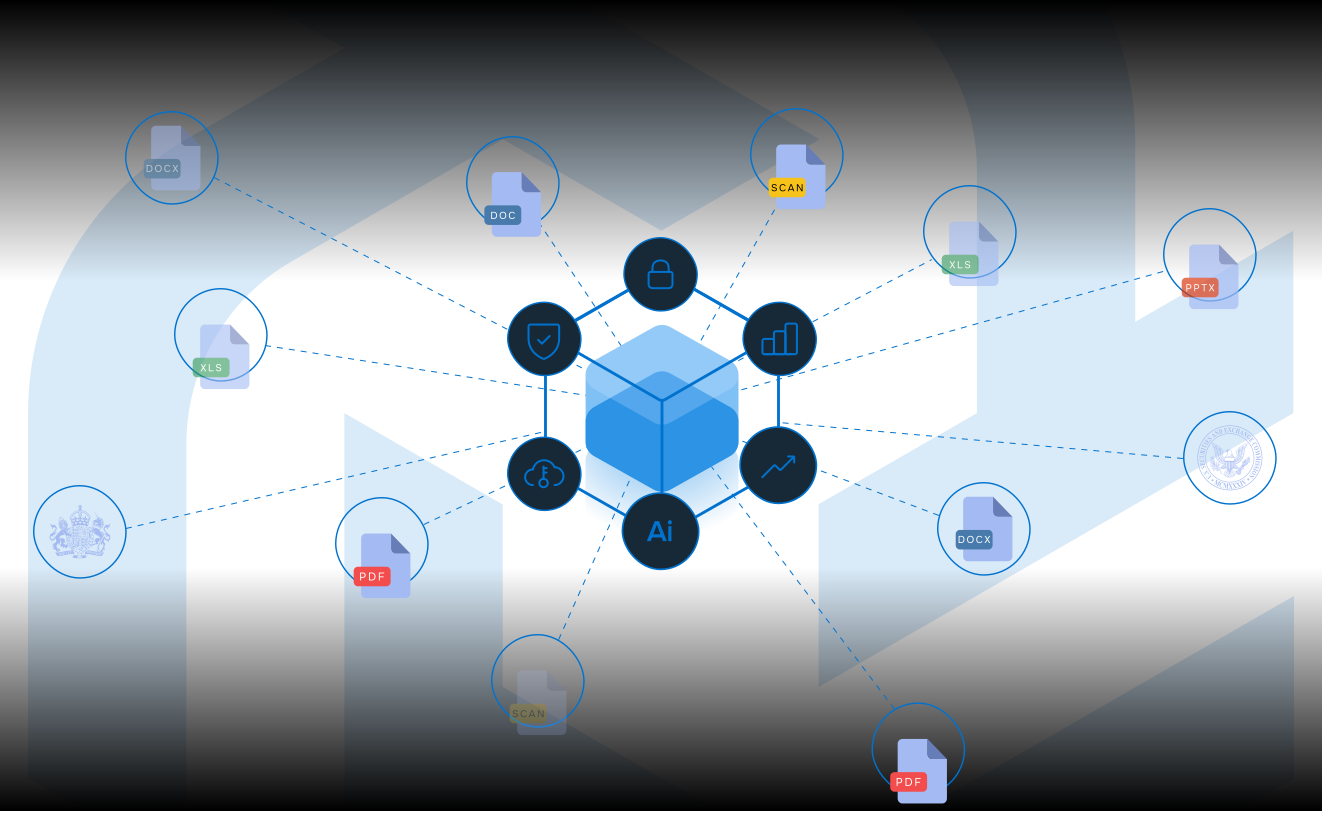
Explore documents through chat
Ask questions across sessions, vault documents, generated files, and prior outputs without leaving the workspace.

Use a shared workspace to ask questions, compare documents, generate outputs, create workflows, and track the artefacts produced from your document data.
Ask questions across sessions, vault documents, generated files, and prior outputs without leaving the workspace.
Turn a request into proposed workflow steps, refine the process in conversation, and create runnable workflows.
Benchmark contracts, summarize filings, produce tables, generate reports, and reuse analysis as artefacts.
Keep messages, workflows, files, comparisons, and outputs visible so teams understand what has been created.
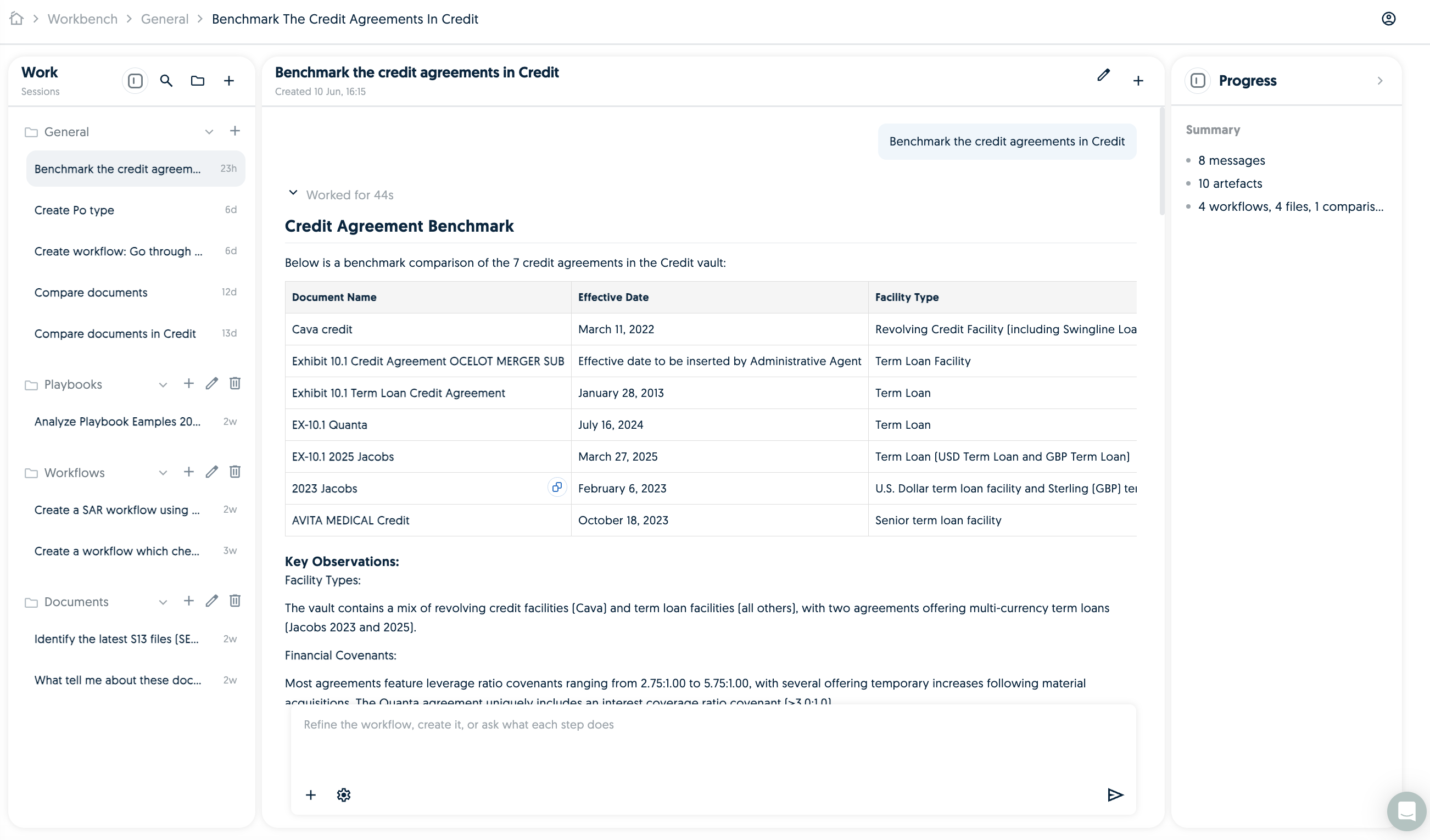
Workbench in action
Workbench is where teams explore document data, ask follow-up questions, generate artefacts, and turn useful analysis into workflows that can be run again.
Chat to workflow
Describe the outcome you need, review the proposed steps, refine the workflow in chat, and create it when the process is ready.
Document analysis
Ask Workbench to compare documents, generate tables, summarize key observations, and keep the files, messages, and outputs visible in the session.
Workbench
Workbench gives analysts and reviewers one place to ask questions, compare files, generate artefacts, and turn useful analysis into repeatable workflows.
Investigate contracts, filings, onboarding packs, and operational documents with source evidence beside each answer.
Resolve exceptions, validate generated outputs, and keep review history visible for colleagues and approvers.
Move recurring questions from one-off chat sessions into repeatable workflows that teams can run again.
Benchmark agreements, policies, filings, or supplier documents and keep the resulting table or report as an artefact.
Ask follow-up questions against source documents, prior outputs, and evidence when a result needs human judgement.
Turn reviewed findings into structured summaries, tables, and downloadable work products for stakeholders.
Describe a recurring task in chat, review proposed workflow steps, refine them, and create a runnable process.