[
Solution
]

How to Track Supplier Price Increases in Contracts

Supplier price increases and special pricing agreements affect spend forecasting, renewals and negotiation leverage. TextMine helps procurement teams track uplift rights, caps, indices, notice requirements, rejection rights and renewal price changes from supplier contracts.
What are supplier price increases?

Supplier price increases are contract rights or commercial events that allow a supplier to raise fees, rates or charges. They may appear in price increase clauses, special pricing agreements, renewal terms, order forms, schedules or invoice provisions.

For procurement and finance teams, tracking supplier price increases is critical for spend forecasting, budget control and negotiation planning.

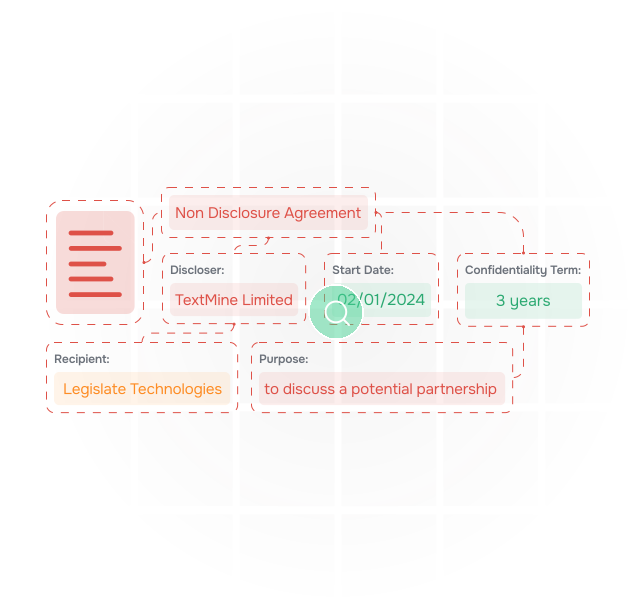
An illustration of data being extracted from documents

Why are supplier price increases and special pricing agreements difficult to track?

Supplier pricing often sits across the MSA, order form, schedules, renewal terms and invoicing provisions. Some increases are capped, some are uncapped, and some depend on external indices or special pricing agreement terms. The right to reject an increase may be tied to a narrow notice window.

TextMine extracts price mechanics and links them to renewal workflows so teams can act before supplier price increases become automatic. Related supplier review work can be connected to a supplier risk assessment process.

an illustration of documents

How does TextMine automate supplier price increase tracking?

Vault extracts the increase trigger, cap, index, notice period, renewal timing, rejection rights and special pricing agreement terms. Workflows can notify procurement before renewal windows, while Records store approved pricing positions for spend dashboards and supplier reviews.

Playbooks can flag high-risk positions such as uncapped increases, short notice periods, missing termination rights or pricing terms that need finance approval.

an illustration of vault extracting data from contracts and answering questions about them

Supplier price increase tracking example

The Supplier may increase Subscription Fees at the start of each Renewal Term upon thirty days' prior written notice by the lower of the then-current list price or five percent above the amount specified in the Consumer Price Index.

In a tracked workflow, the renewal date, notice window, cap, index and approval owner become structured fields instead of buried contract text.

Can fees increase?
Yes, at renewal
Notice period
30 days prior written notice
Increase cap
Lower of list price or CPI + 5%
Workflow action
Route renewal price review
Can fees increase?
Yes, at renewal
Notice period
30 days prior written notice
Increase cap
Lower of list price or CPI + 5%
Workflow action
Route renewal price review

Supplier price increase tracking example

The Supplier may increase Subscription Fees at the start of each Renewal Term upon thirty days' prior written notice by the lower of the then-current list price or five percent above the amount specified in the Consumer Price Index.

In a tracked workflow, the renewal date, notice window, cap, index and approval owner become structured fields instead of buried contract text.

Can fees increase?
Yes, at renewal
Notice period
30 days prior written notice
Increase cap
Lower of list price or CPI + 5%
Workflow action
Route renewal price review
Can fees increase?
Yes, at renewal
Notice period
30 days prior written notice
Increase cap
Lower of list price or CPI + 5%
Workflow action
Route renewal price review

Map TextMine to your document workflow

Tell us what you are trying to review, extract, route, or report on. We will show which TextMine products fit your process, from Workbench and Vault through Workflows, Records, Playbooks, and Integrations.

Thank you! Your submission has been received!
Oops! Something went wrong while submitting the form.