[
Solution
]

How to run a contract remediation programme with AI?

Use AI-native document workflows to find contract issues, validate evidence, assign remediation tasks, and report progress.
Move remediation from spreadsheets to governed workflows

Contract remediation programmes often begin with a policy change, regulatory deadline, transaction, supplier risk event, or template refresh. The hard part is turning a large document population into a controlled workstream with evidence, decisions, owners, and audit trails.

TextMine helps consulting, legal, compliance, and procurement teams use Vault to ingest documents, extract issues, and create source-linked evidence that can be actioned through Workflows.

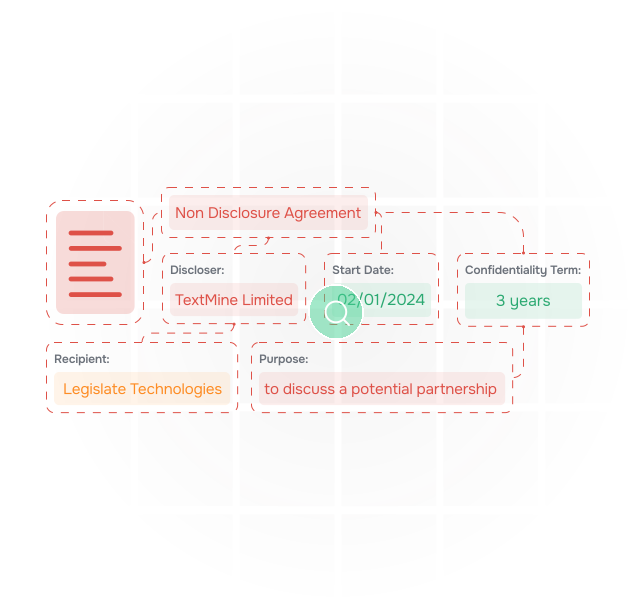
An illustration of data being extracted from documents

Define the issue model

Teams can define the clauses, obligations, dates, counterparties, jurisdictions, products, and remediation triggers they need to identify. Playbooks can encode policy positions and escalation rules so each document is assessed consistently.

Examples include missing sanctions language, outdated data processing terms, non-standard termination rights, weak audit clauses, expiring certificates, or inconsistent liability caps.

an illustration of documents

Operate with confidence scores and reviewer decisions

TextMine records confidence scores, source evidence, and reviewer actions. Low-confidence findings can route to human review, while high-confidence issues can move directly into remediation queues, records updates, or client reports.

Records give the programme a structured view of current state, proposed changes, validation status, and open gaps.

an illustration of vault extracting data from contracts and answering questions about them

Produce defensible programme reporting

Programme leads can report progress by entity, supplier, clause family, business unit, risk type, and remediation status. Because each metric is linked back to evidence, reports are easier to defend in steering committees, audits, and regulator-facing work.

Ingest the population
Load contracts, policies, supplier documents, and supporting evidence into Vault.
Define remediation rules
Use Playbooks to describe the issue model and acceptable positions.
Extract and classify
Identify affected documents, clauses, obligations, and counterparties.
Route work
Assign exceptions, approvals, outreach, and remediation tasks through Workflows.
Validate records
Confirm proposed values and store them as governed operational records.
Report progress
Track open gaps, completed remediation, review queues, and risk exposure.
Maintain the audit trail
Keep source evidence, reviewer decisions, and approvals tied to each outcome.
Ingest the population
Load contracts, policies, supplier documents, and supporting evidence into Vault.
Define remediation rules
Use Playbooks to describe the issue model and acceptable positions.
Extract and classify
Identify affected documents, clauses, obligations, and counterparties.
Route work
Assign exceptions, approvals, outreach, and remediation tasks through Workflows.
Validate records
Confirm proposed values and store them as governed operational records.
Report progress
Track open gaps, completed remediation, review queues, and risk exposure.
Maintain the audit trail
Keep source evidence, reviewer decisions, and approvals tied to each outcome.

Produce defensible programme reporting

Programme leads can report progress by entity, supplier, clause family, business unit, risk type, and remediation status. Because each metric is linked back to evidence, reports are easier to defend in steering committees, audits, and regulator-facing work.

Ingest the population
Load contracts, policies, supplier documents, and supporting evidence into Vault.
Define remediation rules
Use Playbooks to describe the issue model and acceptable positions.
Extract and classify
Identify affected documents, clauses, obligations, and counterparties.
Route work
Assign exceptions, approvals, outreach, and remediation tasks through Workflows.
Validate records
Confirm proposed values and store them as governed operational records.
Report progress
Track open gaps, completed remediation, review queues, and risk exposure.
Maintain the audit trail
Keep source evidence, reviewer decisions, and approvals tied to each outcome.
Ingest the population
Load contracts, policies, supplier documents, and supporting evidence into Vault.
Define remediation rules
Use Playbooks to describe the issue model and acceptable positions.
Extract and classify
Identify affected documents, clauses, obligations, and counterparties.
Route work
Assign exceptions, approvals, outreach, and remediation tasks through Workflows.
Validate records
Confirm proposed values and store them as governed operational records.
Report progress
Track open gaps, completed remediation, review queues, and risk exposure.
Maintain the audit trail
Keep source evidence, reviewer decisions, and approvals tied to each outcome.

Watch a video of Vault extract data from documents

How to get started with Vault

To see how Vault performs on your use document data extraction use case, book a demo with a member of our team using the following form.

Thank you! Your submission has been received!
Oops! Something went wrong while submitting the form.