[
Solution
]

How to integrate a document data extraction API?

Integrate a document data extraction API for compliance document data extraction, reviewed outputs, source evidence, and enterprise workflow automation.
What should a data extraction API provide?

A data extraction API should accept documents and metadata, return structured values, provide source evidence, expose confidence and status, and support review before system updates. For enterprise document data extraction, the API should also preserve request IDs, workflow state, reviewer decisions, and audit history.

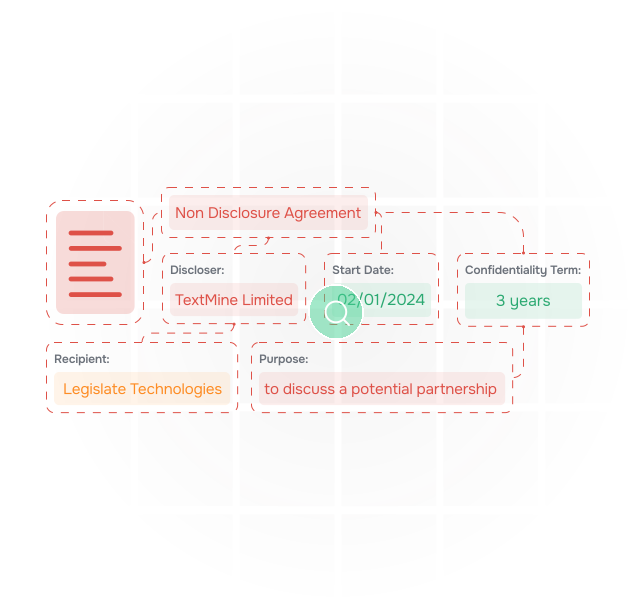
An illustration of data being extracted from documents

Design the document extraction API around review controls

Automated extraction APIs can move errors quickly when they bypass review. TextMine lets teams route uncertain values to reviewers before approved data is returned to product, risk, legal, compliance, or operations systems.

This matters for compliance document data extraction, where each returned field may need evidence, policy context, and a defensible approval trail.

an illustration of documents

Connect AI document data extraction into enterprise systems

Use TextMine Integrations as an API for data extraction workflows: submit documents, trigger AI extraction, create governed records, monitor workflow state, and send reviewed outputs to downstream applications.

Teams can use the API surface like an enterprise document data extraction SDK around their own intake portals, CLM, CRM, ERP, case management, or data platforms.

an illustration of vault extracting data from contracts and answering questions about them

Example extraction API integration pattern

An internal system submits a supplier contract or compliance file, receives extraction status, waits for review completion, and then stores approved fields with source evidence. The same pattern supports extraction API workflows for onboarding, KYC, procurement, legal operations, and regulatory review.

Submit documents
Send files, metadata, request IDs, and workflow context to the API.
Extract fields
Capture clauses, dates, values, entities, and compliance evidence.
Route review
Escalate low-confidence outputs before systems are updated.
Approve records
Create governed, source-backed records for downstream systems.
Return payloads
Send approved data extraction API responses and status updates.
Monitor workflow
Track processing state, errors, retries, and reviewer actions.
Audit evidence
Preserve request, source page, reviewer, and output history.
Submit documents
Send files, metadata, request IDs, and workflow context to the API.
Extract fields
Capture clauses, dates, values, entities, and compliance evidence.
Route review
Escalate low-confidence outputs before systems are updated.
Approve records
Create governed, source-backed records for downstream systems.
Return payloads
Send approved data extraction API responses and status updates.
Monitor workflow
Track processing state, errors, retries, and reviewer actions.
Audit evidence
Preserve request, source page, reviewer, and output history.

Example extraction API integration pattern

An internal system submits a supplier contract or compliance file, receives extraction status, waits for review completion, and then stores approved fields with source evidence. The same pattern supports extraction API workflows for onboarding, KYC, procurement, legal operations, and regulatory review.

Submit documents
Send files, metadata, request IDs, and workflow context to the API.
Extract fields
Capture clauses, dates, values, entities, and compliance evidence.
Route review
Escalate low-confidence outputs before systems are updated.
Approve records
Create governed, source-backed records for downstream systems.
Return payloads
Send approved data extraction API responses and status updates.
Monitor workflow
Track processing state, errors, retries, and reviewer actions.
Audit evidence
Preserve request, source page, reviewer, and output history.
Submit documents
Send files, metadata, request IDs, and workflow context to the API.
Extract fields
Capture clauses, dates, values, entities, and compliance evidence.
Route review
Escalate low-confidence outputs before systems are updated.
Approve records
Create governed, source-backed records for downstream systems.
Return payloads
Send approved data extraction API responses and status updates.
Monitor workflow
Track processing state, errors, retries, and reviewer actions.
Audit evidence
Preserve request, source page, reviewer, and output history.

Map TextMine to your document workflow

Tell us what you are trying to review, extract, route, or report on. We will show which TextMine products fit your process, from Workbench and Vault through Workflows, Records, Playbooks, and Integrations.

Thank you! Your submission has been received!
Oops! Something went wrong while submitting the form.