[
Solution
]

How to detect risk appetite breaches from documents?

Identify threshold breaches, early warning indicators, exceptions, committee actions, mitigation plans, and evidence across risk reporting packs.
Find breach signals across narrative packs

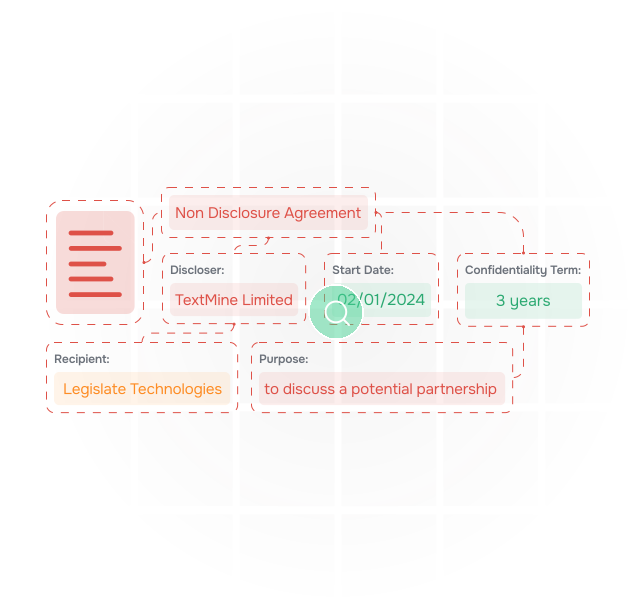
Risk appetite metrics are often supported by management reports, committee papers, exceptions, incident notes, control results, and portfolio commentary. TextMine can extract threshold values, breach indicators, causes, and actions from those documents.

An illustration of data being extracted from documents

Apply appetite statements consistently

Playbooks can define appetite thresholds, amber and red triggers, escalation paths, evidence requirements, and remediation expectations.

an illustration of documents

Route escalations and actions

Workflows can assign breach review, root-cause analysis, mitigation owner actions, legal input, and committee approvals.

an illustration of vault extracting data from contracts and answering questions about them

Create a source-backed appetite view

Records can retain metrics, status, evidence, actions, owners, committee decisions, and residual risk notes.

Extract metrics
Capture thresholds, values, dates, and reporting periods.
Detect breaches
Identify amber and red triggers with source evidence.
Explain causes
Summarize drivers, incidents, exceptions, and context.
Route escalation
Assign owners for breach review and response.
Track actions
Monitor mitigation plans, due dates, and approvals.
Create records
Store appetite status and decision history.
Report trend
Compare breaches by risk type and business area.
Extract metrics
Capture thresholds, values, dates, and reporting periods.
Detect breaches
Identify amber and red triggers with source evidence.
Explain causes
Summarize drivers, incidents, exceptions, and context.
Route escalation
Assign owners for breach review and response.
Track actions
Monitor mitigation plans, due dates, and approvals.
Create records
Store appetite status and decision history.
Report trend
Compare breaches by risk type and business area.

Create a source-backed appetite view

Records can retain metrics, status, evidence, actions, owners, committee decisions, and residual risk notes.

Extract metrics
Capture thresholds, values, dates, and reporting periods.
Detect breaches
Identify amber and red triggers with source evidence.
Explain causes
Summarize drivers, incidents, exceptions, and context.
Route escalation
Assign owners for breach review and response.
Track actions
Monitor mitigation plans, due dates, and approvals.
Create records
Store appetite status and decision history.
Report trend
Compare breaches by risk type and business area.
Extract metrics
Capture thresholds, values, dates, and reporting periods.
Detect breaches
Identify amber and red triggers with source evidence.
Explain causes
Summarize drivers, incidents, exceptions, and context.
Route escalation
Assign owners for breach review and response.
Track actions
Monitor mitigation plans, due dates, and approvals.
Create records
Store appetite status and decision history.
Report trend
Compare breaches by risk type and business area.

Map TextMine to your document workflow

Tell us what you are trying to review, extract, route, or report on. We will show which TextMine products fit your process, from Workbench and Vault through Workflows, Records, Playbooks, and Integrations.

Thank you! Your submission has been received!
Oops! Something went wrong while submitting the form.