[
Solution
]

How to create incident postmortem evidence trails?

Convert incident reports, timelines, logs, communications, root-cause findings, action plans, and approvals into defensible records.
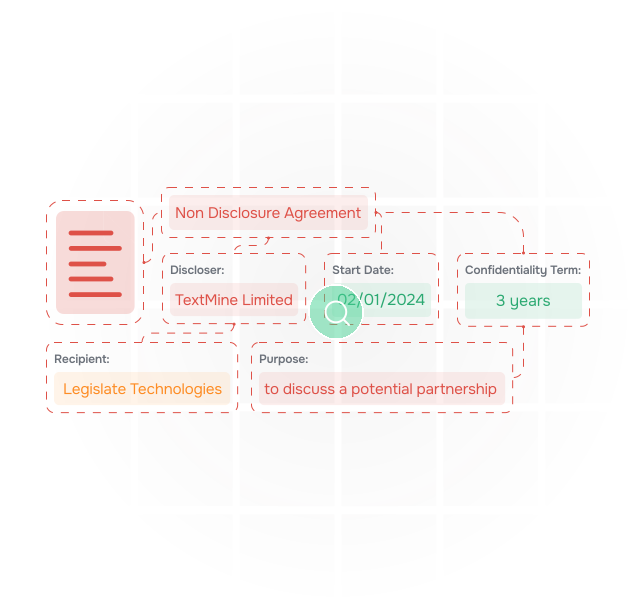
Connect incident narratives to source evidence

Incident postmortems rely on timelines, logs, service reports, customer communications, root-cause analysis, decisions, and remediation plans. TextMine can extract key facts and attach the documents behind them.

An illustration of data being extracted from documents

Standardize postmortem sections

Playbooks can define required fields such as incident start, detection time, impact, affected services, cause, control failures, decisions, and action owners.

an illustration of documents

Route review and remediation

Workflows can send missing evidence, unresolved causes, customer-impact questions, legal review, and overdue actions to the right owner.

an illustration of vault extracting data from contracts and answering questions about them

Keep the decision trail intact

Records can hold the final postmortem, source documents, reviewer comments, control changes, lessons learned, and action closure evidence.

Build timeline
Extract incident start, detection, escalation, and recovery points.
Capture impact
Identify affected services, customers, processes, and controls.
Find causes
Connect root-cause evidence and contributing factors.
Route actions
Assign remediation, legal review, and customer follow-up.
Store records
Keep evidence, decisions, and approvals together.
Track closure
Monitor action owners and completion evidence.
Report lessons
Compare recurring causes and control gaps.
Build timeline
Extract incident start, detection, escalation, and recovery points.
Capture impact
Identify affected services, customers, processes, and controls.
Find causes
Connect root-cause evidence and contributing factors.
Route actions
Assign remediation, legal review, and customer follow-up.
Store records
Keep evidence, decisions, and approvals together.
Track closure
Monitor action owners and completion evidence.
Report lessons
Compare recurring causes and control gaps.

Keep the decision trail intact

Records can hold the final postmortem, source documents, reviewer comments, control changes, lessons learned, and action closure evidence.

Build timeline
Extract incident start, detection, escalation, and recovery points.
Capture impact
Identify affected services, customers, processes, and controls.
Find causes
Connect root-cause evidence and contributing factors.
Route actions
Assign remediation, legal review, and customer follow-up.
Store records
Keep evidence, decisions, and approvals together.
Track closure
Monitor action owners and completion evidence.
Report lessons
Compare recurring causes and control gaps.
Build timeline
Extract incident start, detection, escalation, and recovery points.
Capture impact
Identify affected services, customers, processes, and controls.
Find causes
Connect root-cause evidence and contributing factors.
Route actions
Assign remediation, legal review, and customer follow-up.
Store records
Keep evidence, decisions, and approvals together.
Track closure
Monitor action owners and completion evidence.
Report lessons
Compare recurring causes and control gaps.

Map TextMine to your document workflow

Tell us what you are trying to review, extract, route, or report on. We will show which TextMine products fit your process, from Workbench and Vault through Workflows, Records, Playbooks, and Integrations.

Thank you! Your submission has been received!
Oops! Something went wrong while submitting the form.