[
Solution
]

How to compare master templates against third-party paper?

Compare incoming contracts against approved templates, fallback positions, and risk rules before negotiation starts.
Start contract review from an approved baseline

Third-party paper slows review because the drafting structure, clause order, and terminology rarely match internal templates. TextMine helps legal teams compare third-party drafts against master templates and approved playbook positions so reviewers can focus on material deviations.

Using Playbooks, teams can encode what acceptable language looks like for confidentiality, liability, termination, audit rights, data protection, assignment, governing law, and service levels.

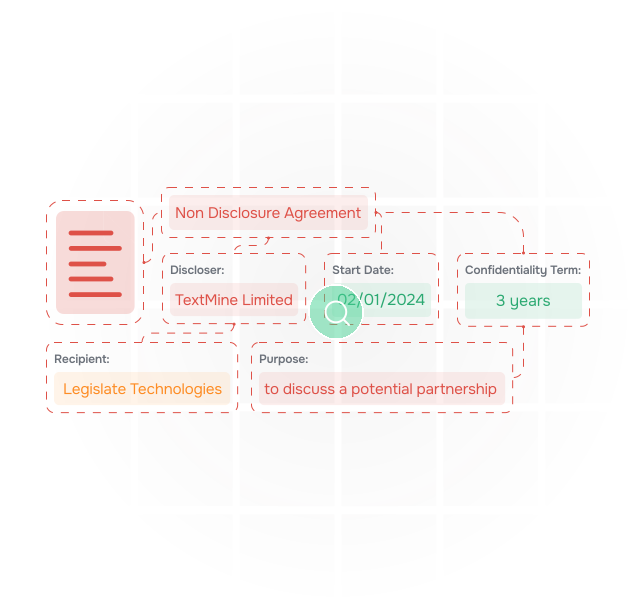
An illustration of data being extracted from documents

Identify missing, changed, and risky provisions

TextMine can classify clauses, compare them to the template position, and highlight missing protections or unusual drafting. The review does not depend on exact wording; it evaluates the legal meaning against the approved rule.

Issues can be backed by source-linked evidence from Vault, giving reviewers a clear path from recommendation to underlying clause.

an illustration of documents

Produce comments and redlines in Word

Where the third-party clause requires changes, TextMine can draft comments and Word redlines that explain the issue and propose template-aligned language. Legal retains final control over the marked-up draft.

For high-risk deviations, Workflows can route the matter to specialist counsel, privacy, security, finance, or commercial leadership.

an illustration of vault extracting data from contracts and answering questions about them

Build institutional memory from each negotiation

Negotiated outcomes can update Records and inform future playbook improvements. Over time, legal teams can see where counterparties push back, which fallback positions are accepted, and which clauses generate the most review effort.

Compare by meaning
Evaluate third-party drafting against approved positions even when wording differs.
Find missing clauses
Detect absent protections such as audit rights, data controls, or termination rights.
Suggest redlines
Generate Word comments and tracked changes based on the master template.
Escalate deviations
Route high-risk language to the right subject matter expert.
Use evidence links
Tie every recommendation to clause text and source document evidence.
Record outcomes
Capture final accepted positions and fallback usage in governed records.
Improve templates
Use recurring negotiation data to refine templates and playbooks.
Compare by meaning
Evaluate third-party drafting against approved positions even when wording differs.
Find missing clauses
Detect absent protections such as audit rights, data controls, or termination rights.
Suggest redlines
Generate Word comments and tracked changes based on the master template.
Escalate deviations
Route high-risk language to the right subject matter expert.
Use evidence links
Tie every recommendation to clause text and source document evidence.
Record outcomes
Capture final accepted positions and fallback usage in governed records.
Improve templates
Use recurring negotiation data to refine templates and playbooks.

Build institutional memory from each negotiation

Negotiated outcomes can update Records and inform future playbook improvements. Over time, legal teams can see where counterparties push back, which fallback positions are accepted, and which clauses generate the most review effort.

Compare by meaning
Evaluate third-party drafting against approved positions even when wording differs.
Find missing clauses
Detect absent protections such as audit rights, data controls, or termination rights.
Suggest redlines
Generate Word comments and tracked changes based on the master template.
Escalate deviations
Route high-risk language to the right subject matter expert.
Use evidence links
Tie every recommendation to clause text and source document evidence.
Record outcomes
Capture final accepted positions and fallback usage in governed records.
Improve templates
Use recurring negotiation data to refine templates and playbooks.
Compare by meaning
Evaluate third-party drafting against approved positions even when wording differs.
Find missing clauses
Detect absent protections such as audit rights, data controls, or termination rights.
Suggest redlines
Generate Word comments and tracked changes based on the master template.
Escalate deviations
Route high-risk language to the right subject matter expert.
Use evidence links
Tie every recommendation to clause text and source document evidence.
Record outcomes
Capture final accepted positions and fallback usage in governed records.
Improve templates
Use recurring negotiation data to refine templates and playbooks.

Watch a video of Vault extract data from documents

How to get started with Vault

To see how Vault performs on your use document data extraction use case, book a demo with a member of our team using the following form.

Thank you! Your submission has been received!
Oops! Something went wrong while submitting the form.