[
Solution
]

How to apply semantic technology to document workflows?

Apply semantic technology to document workflows by turning clauses, obligations, policies, evidence, entities, and relationships into structured records teams can act on.

What is semantic technology for documents?

Semantic technology helps systems understand meaning and relationships, not just text strings. In document workflows, that means connecting entities, obligations, clauses, policies, and evidence.

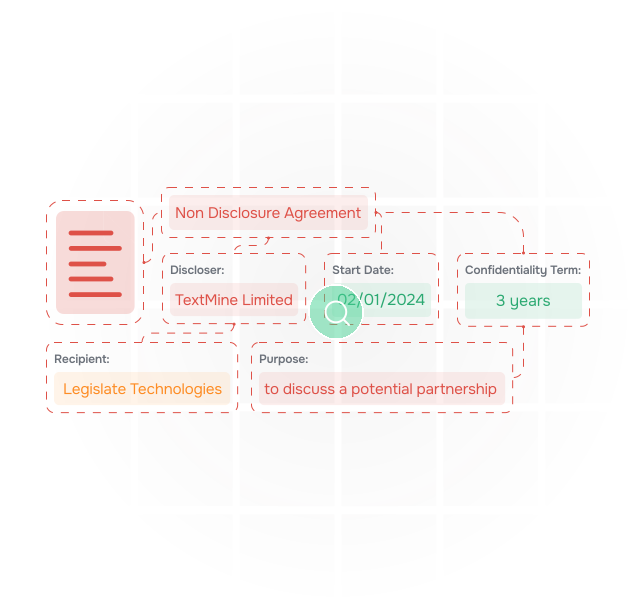
An illustration of data being extracted from documents

Why does meaning matter?

A contract clause may mention a date, party, obligation, exception, and condition. Teams need the meaning of those elements so workflows can route the right action.

an illustration of documents

How does TextMine use semantic structure?

TextMine extracts source-backed facts, organizes them into Records, applies Playbook logic, and activates workflows based on meaning, status, and evidence quality.

an illustration of vault extracting data from contracts and answering questions about them

Example semantic workflow

A subcontracting clause is classified as requiring consent, linked to data processing obligations, and routed to procurement and privacy reviewers before supplier onboarding.

Document meaning
Entities, clauses, obligations, conditions
Structured output
Records and relationship fields
Policy logic
Playbooks classify and route positions
Evidence quality
Source links and confidence
Workflow action
Approval, remediation, export, alert
System value
Data that downstream tools understand
Best fit
Complex review and regulated operations
Document meaning
Entities, clauses, obligations, conditions
Structured output
Records and relationship fields
Policy logic
Playbooks classify and route positions
Evidence quality
Source links and confidence
Workflow action
Approval, remediation, export, alert
System value
Data that downstream tools understand
Best fit
Complex review and regulated operations

Example semantic workflow

A subcontracting clause is classified as requiring consent, linked to data processing obligations, and routed to procurement and privacy reviewers before supplier onboarding.

Document meaning
Entities, clauses, obligations, conditions
Structured output
Records and relationship fields
Policy logic
Playbooks classify and route positions
Evidence quality
Source links and confidence
Workflow action
Approval, remediation, export, alert
System value
Data that downstream tools understand
Best fit
Complex review and regulated operations
Document meaning
Entities, clauses, obligations, conditions
Structured output
Records and relationship fields
Policy logic
Playbooks classify and route positions
Evidence quality
Source links and confidence
Workflow action
Approval, remediation, export, alert
System value
Data that downstream tools understand
Best fit
Complex review and regulated operations

Map TextMine to your document workflow

Tell us what you are trying to review, extract, route, or report on. We will show which TextMine products fit your process, from Workbench and Vault through Workflows, Records, Playbooks, and Integrations.

Thank you! Your submission has been received!
Oops! Something went wrong while submitting the form.